

Mosby’s Pocket Guide to Fetal Monitoring, crafted by clinicians for clinicians, serves as a vital multidisciplinary resource for healthcare professionals.
This guide, continually updated – with the 9th edition slated for 2025 – provides essential information for effective fetal assessment during labor and beyond.
Purpose and Scope of the Guide
Mosby’s Pocket Guide to Fetal Monitoring is meticulously designed as a quick and reliable reference for interpreting fetal monitoring strips and guiding clinical decision-making. Its primary purpose is to equip healthcare providers – including nurses, nurse-midwives, and physicians – with the knowledge to effectively assess fetal well-being during both antepartum and intrapartum periods.
The scope of the guide encompasses a comprehensive overview of fetal heart rate monitoring, including baseline assessment, variability analysis, and the interpretation of accelerations, early, late, and variable decelerations. It extends to understanding external and internal monitoring techniques, as well as uterine contraction analysis.
Furthermore, the guide aids in categorizing fetal heart rate patterns, differentiating between normal and abnormal findings, and implementing appropriate interventions when non-reassuring patterns are identified. Regular updates, like those planned for the 9th edition, ensure the content reflects current best practices and the latest FDA-approved drug information.
Target Audience: Clinicians and Students
Mosby’s Pocket Guide to Fetal Monitoring is intentionally crafted to serve a diverse audience within the healthcare landscape. Primarily, it’s aimed at practicing clinicians – nurses, certified nurse-midwives, and physicians – who routinely interpret fetal monitoring strips and manage laboring patients. The guide’s concise format and practical approach make it ideal for quick reference in busy clinical settings.
However, the guide is equally valuable for students in nursing, midwifery, and medical programs. It provides a foundational understanding of fetal heart rate monitoring principles, equipping them with essential skills for their future practice. Interactive resources, like pill atlases and audio pronunciations, enhance the learning experience.
The multidisciplinary approach ensures relevance across various healthcare roles, fostering collaborative and informed patient care. The guide’s consistent updates reflect evolving standards, benefiting both seasoned professionals and those new to the field.

Understanding Fetal Heart Rate Monitoring
Mosby’s Pocket Guide comprehensively details fetal heart rate monitoring, covering baseline rates, variability, and periodic changes – accelerations, early, late, and variable decelerations.

Baseline Fetal Heart Rate
Mosby’s Pocket Guide to Fetal Monitoring emphasizes the critical importance of establishing and interpreting the baseline fetal heart rate (FHR). This foundational element serves as the starting point for assessing fetal well-being during labor. The guide details how to accurately determine the baseline, defining it as the average FHR over a ten-minute window, excluding periodic variations.
Understanding normal ranges is paramount; typically, a normal baseline FHR falls between 110 and 160 beats per minute (bpm). However, the guide stresses that variations can occur and must be considered within the context of the overall fetal heart rate pattern. Factors influencing the baseline, such as maternal position, medications, and fetal activity, are also addressed. Clinicians rely on Mosby’s for concise, practical guidance on recognizing deviations from the normal baseline, which can signal potential fetal distress and necessitate further investigation and intervention.
Fetal Heart Rate Variability
Mosby’s Pocket Guide to Fetal Monitoring dedicates significant attention to fetal heart rate variability (FHRV), recognizing it as a crucial indicator of fetal autonomic nervous system function and oxygenation. The guide explains the different types of variability – minimal, moderate, and absent – and their clinical implications.
Moderate variability, defined as fluctuations of 5-25 bpm, is generally considered reassuring. Conversely, minimal or absent variability raises concerns about potential fetal compromise. Mosby’s provides clear descriptions and visual examples to aid clinicians in accurately assessing FHRV. The guide emphasizes that a decrease in variability often precedes late decelerations, highlighting the importance of early detection. Understanding the nuances of FHRV, as detailed in Mosby’s, is essential for timely intervention and improved neonatal outcomes.
Periodic Fetal Heart Rate Changes
Mosby’s Pocket Guide to Fetal Monitoring thoroughly covers periodic fetal heart rate changes, which are directly related to uterine contractions. These changes – accelerations, early decelerations, late decelerations, and variable decelerations – provide valuable insights into fetal well-being during labor.
The guide details how to differentiate between these patterns, emphasizing their distinct causes and clinical significance. Mosby’s explains that accelerations are generally reassuring, while decelerations require careful evaluation. Specifically, late decelerations are often indicative of uteroplacental insufficiency. The resource stresses the importance of recognizing these patterns promptly to initiate appropriate interventions. Clinicians rely on Mosby’s for a concise yet comprehensive understanding of interpreting these crucial fetal heart rate responses during the birthing process.
Accelerations
Mosby’s Pocket Guide to Fetal Monitoring defines accelerations as transient increases in the fetal heart rate (FHR) above the baseline. These are considered reassuring signs of fetal well-being, indicating adequate fetal reserve and responsiveness to stimuli.
The guide specifies that to qualify as an acceleration, the FHR must increase by at least 15 beats per minute (bpm) for 15 seconds. Mosby’s emphasizes that accelerations are not necessarily linked to uterine contractions and can occur spontaneously. Healthcare professionals utilize this information to assess fetal oxygenation and neurological function. The pocket guide provides clear visual examples and practical guidance for accurate identification and interpretation of accelerations during fetal monitoring, reinforcing their positive prognostic value in labor management.
Early Decelerations
Mosby’s Pocket Guide to Fetal Monitoring details early decelerations as gradual decreases in the fetal heart rate (FHR) that coincide with the onset of a uterine contraction. Critically, the guide clarifies that these decelerations begin and end with the contraction, mirroring its shape.
Mosby’s emphasizes that early decelerations are generally considered benign and are often attributed to fetal head compression during labor, causing a temporary increase in vagal tone. The pocket guide stresses the importance of differentiating early decelerations from other types, like late or variable decelerations, which may indicate fetal distress. Accurate identification, aided by the guide’s visual aids, is crucial for appropriate clinical decision-making and ensuring optimal fetal well-being throughout labor and delivery.
Late Decelerations

Mosby’s Pocket Guide to Fetal Monitoring defines late decelerations as gradual decreases in the fetal heart rate (FHR) that occur after the peak of a uterine contraction. This timing is paramount; the guide highlights that these decelerations consistently follow the contraction’s apex and resolve after the contraction ends.
Mosby’s underscores that late decelerations are typically non-reassuring, often indicating uteroplacental insufficiency – meaning the placenta isn’t delivering enough oxygen to the fetus. The guide stresses the need for immediate intervention when late decelerations are observed, including maternal repositioning, oxygen administration, and potentially, expedited delivery. The pocket guide’s detailed explanations and illustrative examples empower clinicians to swiftly recognize and respond to this critical sign of fetal compromise, prioritizing fetal safety.
Variable Decelerations
Mosby’s Pocket Guide to Fetal Monitoring characterizes variable decelerations as unpredictable, fluctuating changes in the fetal heart rate (FHR). Unlike other deceleration types, their timing isn’t consistently linked to uterine contractions; they can occur before, during, or after a contraction. Mosby’s emphasizes that variable decelerations often reflect umbilical cord compression, temporarily reducing blood flow to the fetus.
The guide details that the shape of variable decelerations is highly variable – hence the name – ranging from shallow, symmetrical dips to deep, “U” or “V” shaped drops. Mosby’s stresses the importance of assessing the context, including the frequency and severity of the decelerations, to determine the appropriate clinical response. Interventions may include repositioning the mother and providing oxygen, aiming to relieve cord compression and restore fetal oxygenation.

The Components of Fetal Monitoring
Mosby’s Pocket Guide details both external and internal fetal monitoring techniques, alongside uterine contraction assessment, crucial for comprehensive fetal well-being evaluation.
External Fetal Monitoring
Mosby’s Pocket Guide to Fetal Monitoring comprehensively covers external fetal monitoring, a non-invasive technique widely utilized throughout labor. This method employs external transducers applied to the maternal abdomen to assess fetal heart rate (FHR) and uterine contractions.
The guide details proper transducer placement for optimal signal acquisition, emphasizing the importance of securing them firmly to minimize artifact. It explains how to interpret the resulting fetal monitoring strip, focusing on identifying baseline FHR, variability, and periodic changes.
Furthermore, Mosby’s clarifies the advantages of external monitoring – its ease of application and non-invasiveness – while also acknowledging its limitations, such as potential signal interference from maternal position or obesity. Clinicians can rely on this resource for a clear understanding of external monitoring principles and practical application.
Internal Fetal Monitoring (IFM)
Mosby’s Pocket Guide to Fetal Monitoring provides detailed guidance on Internal Fetal Monitoring (IFM), an invasive technique offering a more direct and precise assessment of fetal well-being. This method involves placing an electrode directly onto the fetal presenting part to continuously monitor FHR and a pressure catheter into the uterine cavity to measure intrauterine pressure (IUP).
The guide meticulously outlines the indications for IFM, typically reserved for high-risk pregnancies or when external monitoring proves inadequate. It emphasizes the importance of sterile technique during electrode and catheter insertion to prevent infection.
Mosby’s clarifies the benefits of IFM – clearer signal quality and accurate IUP measurement – alongside potential risks, such as fetal injury or infection. Clinicians will find practical advice on interpreting IFM tracings and managing potential complications, ensuring safe and effective patient care.
Uterine Contraction Monitoring
Mosby’s Pocket Guide to Fetal Monitoring dedicates significant attention to uterine contraction monitoring, a crucial component of assessing labor progress and fetal well-being. The guide details both external and internal methods for accurately gauging contractions.
It thoroughly explains how to assess frequency and duration of contractions, defining normal ranges and identifying patterns indicative of hyper- or hypotonic labor. Furthermore, Mosby’s provides clear instructions on evaluating intensity of contractions, utilizing palpation or intrauterine pressure catheters (IUPs).
The resource emphasizes the correlation between contraction patterns and fetal response, highlighting the importance of recognizing dysfunctional labor. Clinicians will find practical guidance on interpreting contraction data in conjunction with fetal heart rate monitoring to optimize patient management and intervention strategies.
Frequency and Duration of Contractions
Mosby’s Pocket Guide to Fetal Monitoring meticulously details the assessment of contraction frequency and duration, foundational elements in labor evaluation. Frequency, defined as the time interval between the beginning of one contraction and the beginning of the next, is typically measured in minutes.
The guide clarifies normal progression, noting that contractions generally become more frequent as labor advances. Duration, the length of time a contraction lasts from beginning to end, is measured in seconds. Mosby’s emphasizes understanding typical durations and recognizing deviations.
Accurate documentation of both frequency and duration is paramount, as these parameters directly influence cervical dilation and fetal descent. The guide provides practical tips for consistent measurement and interpretation, aiding clinicians in identifying patterns indicative of normal or abnormal labor progress.
Intensity of Contractions
Mosby’s Pocket Guide to Fetal Monitoring provides comprehensive guidance on assessing contraction intensity, a crucial component of labor management. Unlike frequency and duration, intensity isn’t directly timed but rather evaluated based on the palpable firmness of the uterine muscle during a contraction.
The guide utilizes a descriptive scale – typically mild, moderate, and strong – to categorize intensity. Mild contractions feel similar to a tight brow, moderate like a nose, and strong like a chin. Mosby’s stresses the subjective nature of this assessment and encourages consistent technique.
Understanding contraction intensity helps clinicians gauge the effectiveness of labor and potential fetal response. The guide highlights the correlation between increasing intensity and labor progression, while also cautioning against excessively strong contractions that may compromise fetal well-being.

Interpreting Fetal Monitoring Strips
Mosby’s Pocket Guide expertly details how to categorize fetal heart rate patterns, distinguishing between normal and abnormal tracings for informed clinical decisions.
Categorizing Fetal Heart Rate Patterns
Mosby’s Pocket Guide to Fetal Monitoring provides a structured approach to analyzing fetal heart rate (FHR) patterns, crucial for assessing fetal well-being during labor. The guide emphasizes a systematic interpretation, moving beyond simply identifying individual components to understanding the overall clinical picture.
Clinicians learn to categorize patterns based on baseline rate, variability, and periodic changes – accelerations, early decelerations, late decelerations, and variable decelerations. This categorization isn’t merely descriptive; it directly informs clinical management decisions.
The guide stresses recognizing patterns indicative of fetal compromise, enabling prompt interventions. Understanding these classifications, as presented in Mosby’s, is fundamental for nurses, nurse-midwives, and physicians involved in obstetric care, ensuring optimal outcomes for both mother and baby. Accurate categorization is the cornerstone of effective fetal surveillance.
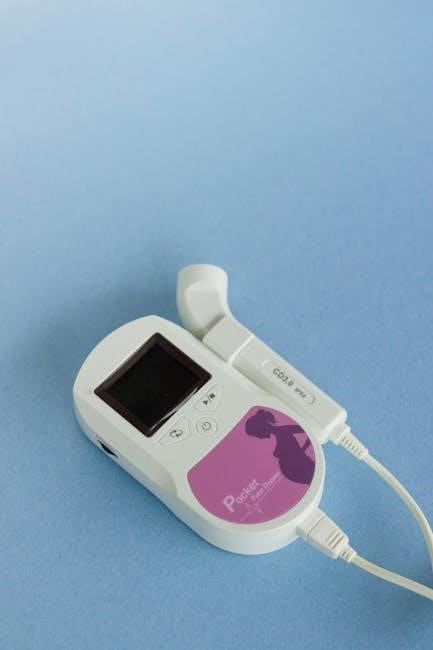
Normal Fetal Heart Rate Patterns
Mosby’s Pocket Guide to Fetal Monitoring defines a normal fetal heart rate (FHR) pattern as exhibiting specific characteristics, serving as a reassuring sign of fetal well-being. Typically, a normal baseline FHR falls within a range of 110 to 160 beats per minute.
Crucially, normal patterns demonstrate moderate variability – subtle, irregular fluctuations around the baseline – indicating healthy fetal autonomic nervous system function. Periodic changes, such as accelerations, are also considered normal and signify fetal responsiveness.
Mosby’s emphasizes that the absence of concerning patterns, rather than the presence of exceptional findings, defines normality. Recognizing these patterns allows clinicians to confidently continue labor management, knowing the fetus is tolerating the process well. Consistent monitoring, guided by Mosby’s, is key.
Abnormal Fetal Heart Rate Patterns
Mosby’s Pocket Guide to Fetal Monitoring details several patterns indicating potential fetal compromise, demanding immediate clinical attention. These include patterns exhibiting minimal or absent variability, suggesting fetal acidosis or neurological issues.
Persistent bradycardia (FHR below 110 bpm) and tachycardia (above 160 bpm) are also flagged as abnormal, requiring investigation into potential causes like maternal hypotension or infection. Late decelerations, consistently occurring after the peak of contractions, are particularly concerning, often signaling placental insufficiency.
Mosby’s stresses that recognizing these patterns isn’t about definitive diagnosis, but rather prompts further assessment and intervention. Prompt response, guided by the guide, is crucial for optimizing fetal outcomes and preventing adverse events during labor.

Clinical Applications and Interventions
Mosby’s Pocket Guide equips clinicians with practical strategies for managing fetal monitoring in labor, and responding effectively to non-reassuring patterns.
Fetal Monitoring in Labor
Mosby’s Pocket Guide to Fetal Monitoring provides crucial guidance for utilizing both external and internal fetal monitoring techniques throughout the labor process. It emphasizes the importance of continuous fetal heart rate (FHR) assessment alongside uterine contraction patterns to evaluate fetal well-being.
The guide details how to effectively interpret FHR tracings in relation to the stage of labor, helping clinicians identify potential issues early on. It stresses the need for a multidisciplinary approach, involving nurses, nurse-midwives, and physicians, to ensure optimal fetal outcomes.
Furthermore, the resource highlights the significance of accurate documentation and reporting of all fetal monitoring data, facilitating clear communication among the healthcare team and supporting informed decision-making regarding interventions if needed during labor.
Responding to Non-Reassuring Fetal Heart Rate Patterns
Mosby’s Pocket Guide to Fetal Monitoring equips clinicians with a systematic approach to address non-reassuring FHR patterns detected during labor. The guide emphasizes prompt intervention based on the specific type of abnormality observed – whether it be late decelerations, variable decelerations, or concerning baseline changes.
It details initial maternal interventions, such as repositioning, hydration, and oxygen administration, aimed at improving fetal oxygenation. The resource also outlines when to escalate care, including considering amnioinfusion or preparing for operative delivery.
Crucially, the guide reinforces the importance of continuous reassessment after each intervention to evaluate its effectiveness and guide further management decisions, ensuring the best possible outcome for both mother and baby.
Documentation and Reporting
Mosby’s Pocket Guide to Fetal Monitoring stresses the critical importance of meticulous documentation of all fetal monitoring data and clinical responses; Accurate and comprehensive records are essential for legal protection and continuity of care, providing a clear timeline of events during labor.
The guide highlights key elements to document, including baseline FHR, variability, periodic changes (accelerations, early, late, and variable decelerations), contraction patterns, and all interventions implemented in response to concerning findings.
Furthermore, it emphasizes the need for clear and concise reporting of any non-reassuring patterns to the healthcare team, facilitating collaborative decision-making and ensuring timely intervention when necessary, ultimately prioritizing patient safety.

Latest Editions and Updates
Mosby’s Pocket Guide is regularly updated; the 9th edition is expected in 2025, featuring new content and reflecting current best practices in fetal monitoring.
Mosby’s Pocket Guide 9th Edition (2025)
The forthcoming 9th edition of Mosby’s Pocket Guide to Fetal Monitoring, anticipated in 2025, promises to be a comprehensive and invaluable resource for clinicians involved in obstetric care. Building upon the established foundation of previous editions, this update will incorporate the latest evidence-based guidelines and advancements in fetal heart rate monitoring techniques.

Expect revisions reflecting current best practices, potentially including expanded coverage of emerging technologies and refined interpretations of fetal monitoring patterns. The guide will continue its multidisciplinary approach, catering to the needs of nurses, nurse-midwives, and physicians. It aims to provide a concise, yet thorough, reference for both experienced practitioners and students navigating the complexities of fetal assessment during labor and delivery.
Users can anticipate a continued focus on practical application, with clear explanations and illustrative examples to enhance understanding and improve clinical decision-making.
Key Updates and New Content
The 9th edition of Mosby’s Pocket Guide to Fetal Monitoring will likely feature updates aligning with the latest FDA-approved drugs impacting obstetric care, potentially exceeding 50 new drug profiles. Expect enhanced clarity in interpreting complex fetal heart rate patterns, building upon the guide’s multidisciplinary foundation.
New content may address evolving perspectives on non-reassuring fetal heart rate patterns and corresponding interventions, emphasizing evidence-based practice. The guide will likely maintain its user-friendly format, potentially incorporating interactive resources like pill atlases and audio pronunciations, mirroring advancements in related nursing references.
Clinicians can anticipate refined guidance on documentation and reporting, ensuring accurate and consistent fetal monitoring records. The focus remains on providing a practical, readily accessible resource for optimal fetal assessment.