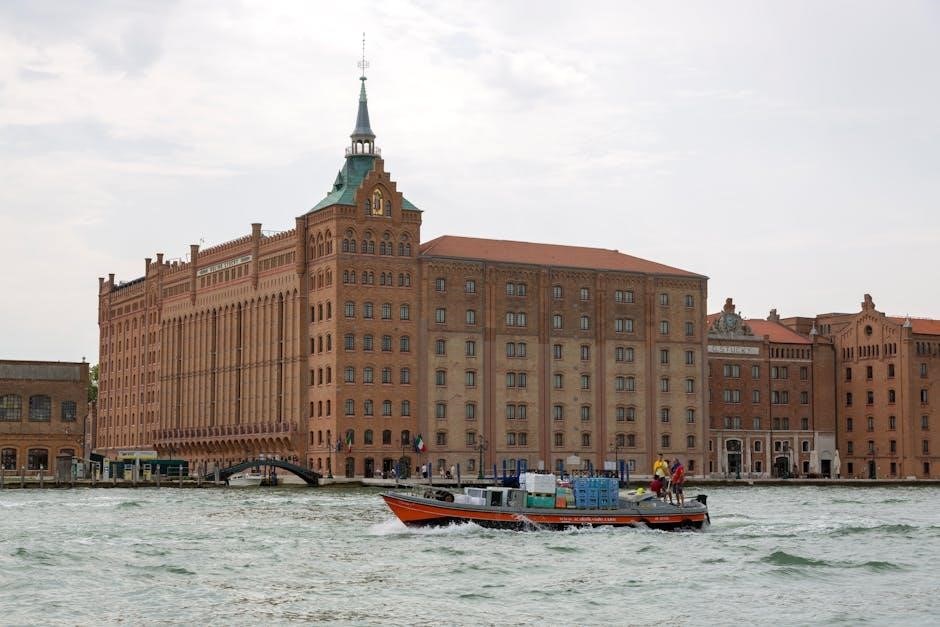
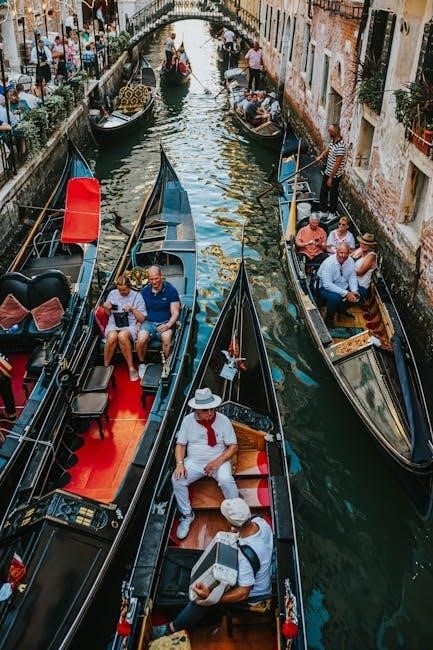
Planning Your Self-Guided Venice Tour
Embark on an independent exploration of Venice‚ utilizing detailed city guides and offline maps for a personalized experience. Discover hidden gems and authentic neighborhoods!
Understanding Venice’s Unique Layout
Venice presents a truly unique urban challenge – a city constructed upon a lagoon‚ demanding innovative architectural and logistical solutions. Unlike typical cities with organized street grids‚ Venice unfolds as a labyrinth of canals‚ narrow alleyways‚ and picturesque bridges. Every element‚ from each brick to every stone‚ was carefully considered due to limited land availability.
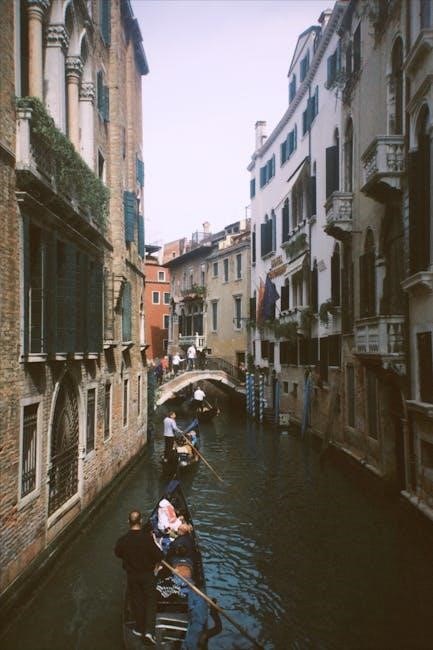
This distinctive layout necessitates a shift in navigational approach. Forget relying on conventional street maps; instead‚ embrace the intricate network of calli (streets) and rii (canals). Understanding the city’s structure is crucial for a successful self-guided tour. It’s a living art and history museum‚ best explored by allowing yourself to get wonderfully lost‚ while keeping a general sense of direction. Prepare to wander and discover hidden corners!
Best Time to Visit Venice
Determining the ideal time to visit Venice hinges on balancing pleasant weather with manageable crowds. Spring (April-May) and Autumn (September-October) generally offer the sweet spot – milder temperatures‚ fewer tourists‚ and a vibrant atmosphere. Summer (June-August) boasts warm weather‚ but also peak season crowds and higher prices. Expect humidity and potential heat waves.
Winter (November-March) presents a quieter‚ more authentic Venice‚ though acqua alta (high water) is a possibility. While some attractions may have reduced hours‚ the city retains its charm. Consider shoulder seasons for a balance of affordability and accessibility. Regardless of when you choose to explore‚ booking accommodations and tours in advance is highly recommended‚ especially for independent travelers.
Essential Apps for Self-Guided Tours
Enhance your self-guided Venice experience with the right mobile applications. Google Maps is invaluable for navigation‚ especially when paired with downloadable offline maps to avoid data charges. Several apps specialize in Venice walking tours‚ offering audio guides and curated routes. Look for options with offline functionality for uninterrupted exploration.
Consider apps providing information on the traghetto lines – the gondola ferry services offering a unique‚ affordable way to cross the Grand Canal. Interactive map applications‚ even in “super alpha” stages‚ can reveal hidden alleys and local favorites. Venice-specific guides detailing history‚ monuments‚ and events are also beneficial. Prioritize apps with user reviews to ensure reliability and quality content for a seamless journey.
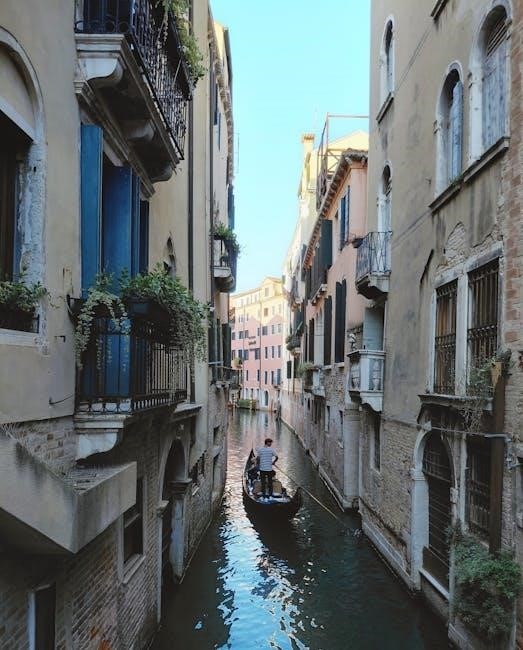
Navigating Venice: Transportation & Maps
Explore Venice by foot and water; utilize maps for walking routes and consider the unique traghetto gondola ferry lines for canal crossings.
Utilizing Google Maps for Walking Routes
Google Maps is an invaluable tool for navigating Venice’s labyrinthine streets‚ especially for a self-guided tour. Download offline maps before your trip to avoid data charges and ensure access even without an internet connection. The key is to embrace the detail; Venice’s narrow calli (streets) aren’t always straightforward.
Leverage the interactive features – zoom in to reveal hidden passageways and smaller squares often missed on standard tourist routes. Consider creating custom maps with saved locations of interest‚ restaurants‚ and traghetto stops. Several resources offer pre-made Google My Maps specifically for Venice walking tours‚ providing curated routes and points of interest.
Remember that Google Maps may not always reflect the most direct pedestrian route due to the city’s unique layout. Be prepared to adjust your path and embrace getting wonderfully lost! The app’s walking directions are generally accurate‚ but always double-check against physical signage.
The “Traghetto” Experience: Gondola Ferry Lines
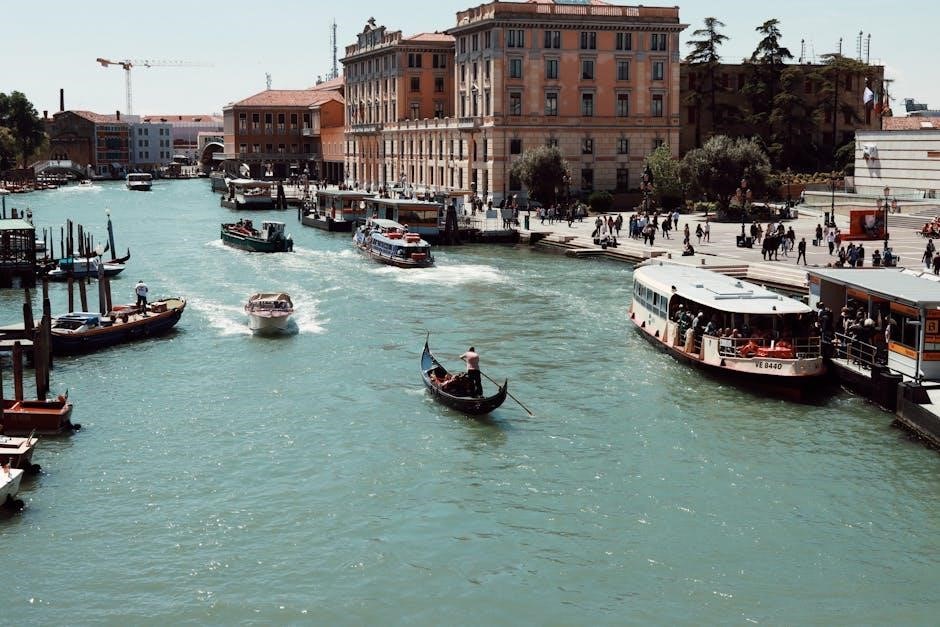
Experience a truly Venetian mode of transport – the traghetto‚ a gondola functioning as a public ferry. For just a few euros‚ you can cross the Grand Canal at specific points‚ offering a quick and authentic alternative to bridges. It’s a local’s secret and a fantastic way to experience the canal from water level.
These aren’t romantic gondola rides; they’re practical crossings‚ often used by residents. Stand-up passengers are efficiently ferried across‚ providing a glimpse into daily Venetian life. Currently‚ four reliable traghetto lines operate‚ though their availability can vary. Locating them requires a bit of exploration‚ but pre-downloaded maps can help.
Embrace the slightly chaotic‚ yet charming‚ experience. It’s a short ride‚ but a memorable one‚ offering a unique perspective and a taste of authentic Venice. It’s a perfect addition to your self-guided tour!
Understanding Venice’s Districts (Sestieri)
Venice is uniquely divided into six historic districts‚ known as sestieri: Cannaregio‚ Castello‚ Dorsoduro‚ San Marco‚ San Polo‚ and Santa Croce. Each possesses a distinct character and atmosphere‚ crucial for planning a comprehensive self-guided tour. San Marco is the bustling heart‚ while Cannaregio offers a more authentic‚ residential feel.
Dorsoduro boasts art galleries and museums‚ and San Polo is famed for the Rialto Market. Castello‚ the largest‚ is a mix of residential areas and the Arsenale. Santa Croce‚ the transport hub‚ provides easy access to the mainland.
Exploring beyond San Marco reveals the true soul of Venice. Understanding these districts allows you to tailor your itinerary‚ venturing off the beaten path and discovering hidden gems. Utilize maps to navigate and immerse yourself in the unique charm of each sestiere.
Self-Guided Walking Tour: San Marco District
Begin your Venetian adventure in San Marco‚ the city’s historical core‚ exploring iconic landmarks and immersing yourself in centuries of art and power.
St. Mark’s Square: A Historical Overview
St. Mark’s Square‚ the heart of Venice‚ has served as the city’s political‚ religious‚ and social center for centuries; Originally a small courtyard adjacent to the Basilica‚ it evolved into the grand space we see today under the Doge’s rule.
Throughout history‚ the square witnessed vibrant markets‚ political rallies‚ and grand processions. Napoleon famously dubbed it “the drawing room of Europe‚” recognizing its significance. The surrounding Procuratie Vecchie and Nuove‚ elegant arcaded buildings‚ were designed to provide administrative offices and housing.
Observe the iconic landmarks: St. Mark’s Basilica‚ Doge’s Palace‚ and the Campanile. The square’s unique topography‚ prone to flooding during acqua alta‚ adds to its dramatic character. Take time to absorb the atmosphere‚ imagining the countless historical events that unfolded within its boundaries‚ and appreciate its enduring beauty.
Doge’s Palace: Exploring Venetian Power
Doge’s Palace‚ a masterpiece of Venetian Gothic architecture‚ stands as a testament to the power and wealth of the Venetian Republic. For centuries‚ it served as the residence of the Doge‚ the supreme ruler of Venice‚ and the seat of government.
Explore the opulent state rooms‚ adorned with masterpieces by Tintoretto‚ Veronese‚ and Titian‚ depicting Venice’s glorious history and naval victories. Walk across the Bridge of Sighs‚ connecting the palace to the prisons‚ and imagine the last glimpse of freedom for those incarcerated within.
Delve into the palace’s intricate political system and judicial processes. The palace’s architecture itself reflects Venetian power – a deliberate display of wealth and authority designed to impress visitors and maintain control. It’s a journey into the heart of a maritime empire.
St. Mark’s Basilica: Art and Architecture
St. Mark’s Basilica‚ a stunning example of Italo-Byzantine architecture‚ dominates St. Mark’s Square. Originally built as the Doge’s private chapel‚ it evolved into Venice’s patriarchal cathedral. Its shimmering golden mosaics‚ brought from Constantinople‚ narrate biblical stories and Venetian history.
Marvel at the Basilica’s five massive domes‚ symbolizing Christ and the Evangelists. Inside‚ the Pala d’Oro‚ a breathtaking gold altarpiece encrusted with precious stones‚ is a must-see. Explore the treasury‚ housing relics and treasures accumulated over centuries.
The Basilica’s exterior is equally impressive‚ featuring intricate carvings‚ sculptures‚ and the iconic bronze horses. It’s a fusion of artistic styles‚ reflecting Venice’s role as a crossroads of cultures and a powerful maritime republic. Prepare to be captivated by its beauty!
Exploring Beyond San Marco: Hidden Gems
Venture into Venice’s quieter districts – Cannaregio‚ Dorsoduro‚ and Rialto – to uncover authentic local life and escape the tourist crowds.
Rialto Bridge & Market: A Vibrant Hub
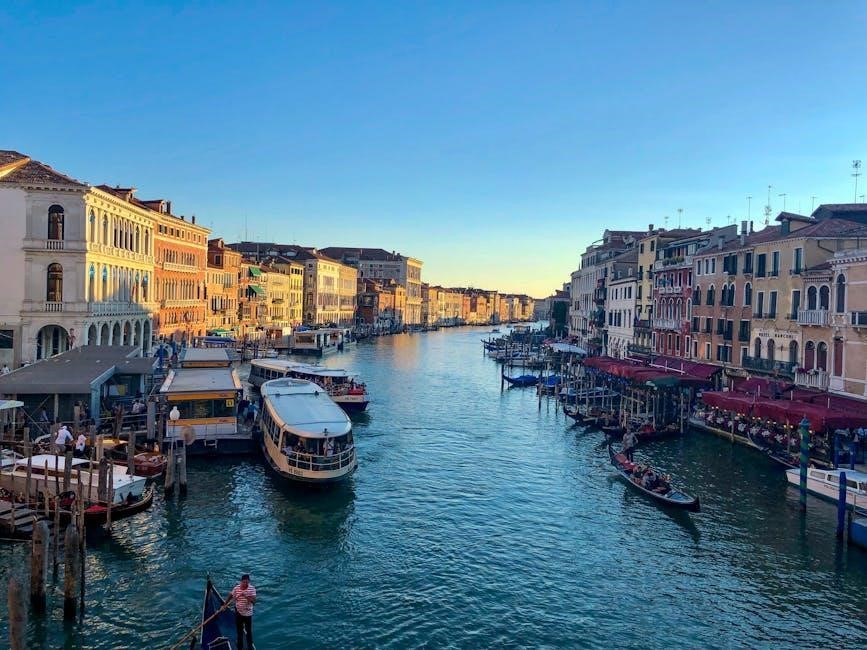
The Rialto Bridge stands as an iconic symbol of Venice‚ offering breathtaking views of the Grand Canal. More than just a picturesque landmark‚ the surrounding Rialto Market is a bustling center of daily Venetian life.
Historically‚ this area served as the economic heart of Venice‚ and that energy persists today. Explore the pescheria (fish market) in the morning for a vibrant display of fresh catches‚ and the erberia (fruit and vegetable market) for colorful produce.
Wander through the narrow streets surrounding the market‚ discovering small shops selling local crafts and delicacies. It’s a fantastic place to sample cicchetti (Venetian tapas) and experience the authentic flavors of the city. Be prepared for crowds‚ especially during peak season‚ but the lively atmosphere is well worth it. The Rialto area truly embodies the spirit of Venice‚ blending history‚ commerce‚ and local culture.
Cannaregio District: Authentic Venetian Life
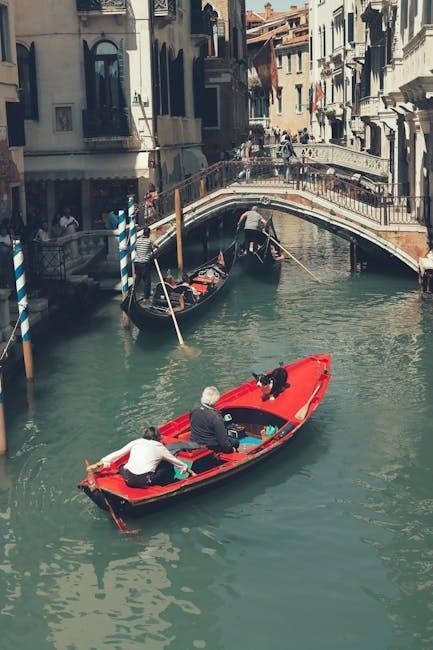
Cannaregio offers a glimpse into the everyday life of Venetians‚ away from the tourist throngs of San Marco. This northern district retains a distinctly local character‚ with quieter canals and charming residential streets.
Explore the Jewish Ghetto‚ one of the oldest in the world‚ and learn about its rich history and cultural significance. Wander along the Fondamenta della Misericordia‚ a lively canal-side promenade lined with bacari (Venetian wine bars) and restaurants.
Cannaregio is a perfect place to get lost and discover hidden squares and local shops. Enjoy a leisurely stroll along the canals‚ observing the daily routines of residents. It’s an ideal spot to savor authentic Venetian cuisine and experience the city’s genuine atmosphere. This district provides a refreshing contrast to the more crowded areas‚ offering a more intimate and immersive experience.
Dorsoduro District: Art & Culture
Dorsoduro is Venice’s artistic heart‚ boasting a wealth of museums‚ galleries‚ and historic churches. This district‚ located south of San Marco‚ offers a more relaxed and bohemian atmosphere.
Visit the Peggy Guggenheim Collection‚ showcasing modern art masterpieces in a stunning palazzo on the Grand Canal. Explore the Gallerie dell’Accademia‚ home to a comprehensive collection of Venetian paintings from the 14th to 18th centuries.
Wander through the charming streets and discover artisan workshops and independent boutiques. Enjoy the vibrant atmosphere of Campo Santa Margherita‚ a lively square popular with locals and students. Dorsoduro provides a captivating blend of artistic heritage and contemporary culture‚ making it a must-visit for art enthusiasts and those seeking a more authentic Venetian experience.
Practical Tips for Your Tour
Prioritize comfortable footwear‚ stay hydrated‚ and be mindful of local customs while exploring Venice’s unique streets and canals for a seamless journey.
Footwear Recommendations for Venice
Navigating Venice requires careful consideration of your footwear choices. Unlike many cities‚ Venice involves a significant amount of walking – often on uneven surfaces‚ cobblestones‚ and bridges. Comfortable‚ supportive shoes are absolutely essential for enjoying your self-guided tour without foot fatigue. Avoid high heels or shoes that haven’t been broken in‚ as these will quickly become unbearable.
Waterproof or water-resistant shoes are highly recommended‚ especially during the acqua alta (high water) season. Even outside of peak flooding times‚ splashes and dampness are common. Opt for closed-toe shoes to protect your feet from potential bumps and scrapes. Lightweight walking shoes or sneakers with good traction are ideal. Consider bringing a spare pair of shoes to alternate between‚ allowing them to dry completely if they get wet. Blisters can ruin a trip‚ so preventative measures like moisture-wicking socks are also a smart investment. Prioritizing your feet will ensure a much more enjoyable Venetian experience!
Staying Hydrated & Finding Restrooms
Exploring Venice on foot‚ especially during warmer months‚ demands consistent hydration. Carry a reusable water bottle and refill it whenever possible. While tap water is generally safe‚ many prefer bottled water readily available in shops. Staying hydrated combats fatigue and ensures you can fully enjoy your self-guided adventure.
Finding restrooms in Venice can be surprisingly challenging. Public restrooms are limited and often require a small fee. Cafés and bars typically allow customers to use their facilities with a purchase – a coffee or snack is a reasonable investment for convenience. Be aware that some establishments may charge a fee even for customers. Planning your route with potential restroom stops in mind is advisable. Look for signs indicating “toilette” or “bagni.” Remember to carry tissues or hand sanitizer‚ as supplies may not always be available. Prior planning prevents potential discomfort during your exploration!
Respecting Local Customs & Etiquette
Venice is a living city‚ not just a museum. Respecting local customs enhances your experience and demonstrates consideration for residents. Avoid excessively loud noise‚ particularly in residential areas‚ and dress modestly when visiting churches – shoulders and knees should be covered. Public displays of affection should be discreet.
Be mindful of the narrow streets and pedestrian traffic; step aside to allow locals to pass. Avoid sitting on bridges or steps‚ as this obstructs pathways. When entering small shops‚ a polite “Buongiorno” or “Buonasera” is appreciated. Refrain from eating or drinking while walking‚ as it’s considered impolite. Support local businesses by purchasing souvenirs and enjoying meals at traditional restaurants. Learning a few basic Italian phrases shows respect and can enrich your interactions. Remember‚ responsible tourism contributes to preserving Venice’s unique charm for future generations.
Venice’s History & Architecture
Founded on a lagoon‚ Venice’s architecture arose from necessity‚ a cohesive puzzle built with thoughtful consideration‚ becoming a living art and history museum.
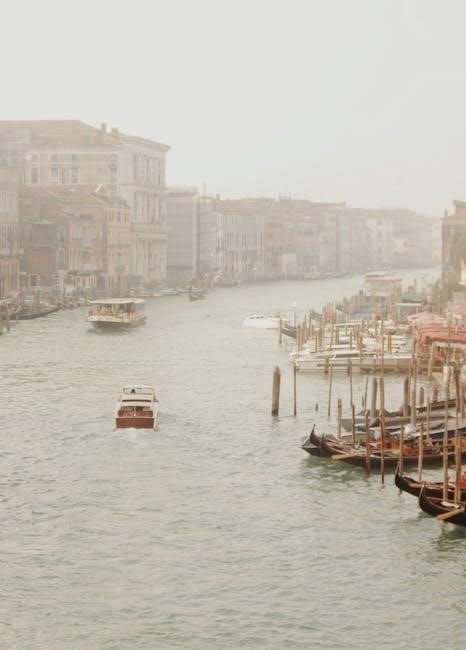
The Founding of Venice & Early History
The story of Venice begins with refugees. As Roman power declined‚ inhabitants of the mainland sought shelter from barbarian invasions in the marshy Venetian Lagoon. These early settlements‚ initially scattered‚ gradually coalesced into the foundations of the city we know today. The first Venetians‚ facing a challenging environment‚ adapted and innovated‚ learning to build on the unstable land and utilize the waterways for transportation and defense.
Over centuries‚ Venice evolved from a collection of humble settlements into a thriving maritime republic. Its strategic location facilitated trade between East and West‚ fostering economic prosperity and political independence. The city’s unique position allowed it to become a crucial intermediary‚ accumulating wealth and influence. This early history profoundly shaped Venice’s character‚ fostering a spirit of resilience‚ ingenuity‚ and a distinct cultural identity – all elements visible even during a self-guided tour.
The lagoon itself dictated much of Venice’s development‚ influencing its architecture and urban planning. Every brick and stone had to be carefully considered‚ a testament to the ingenuity of its builders.
Venetian Gothic Architecture: Key Features
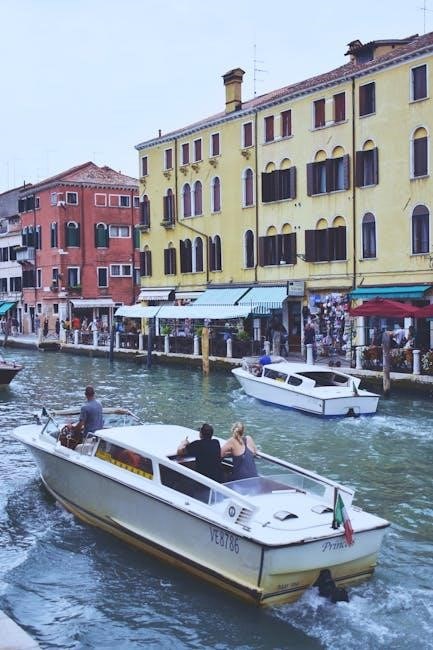
Venetian Gothic architecture‚ a distinctive style flourishing between the 14th and 15th centuries‚ uniquely blends Gothic elements with Byzantine and Moorish influences‚ reflecting Venice’s role as a trading hub. Unlike mainland Gothic‚ Venetian Gothic showcases a horizontal emphasis‚ adapting to the city’s lagoon environment and prioritizing stability.
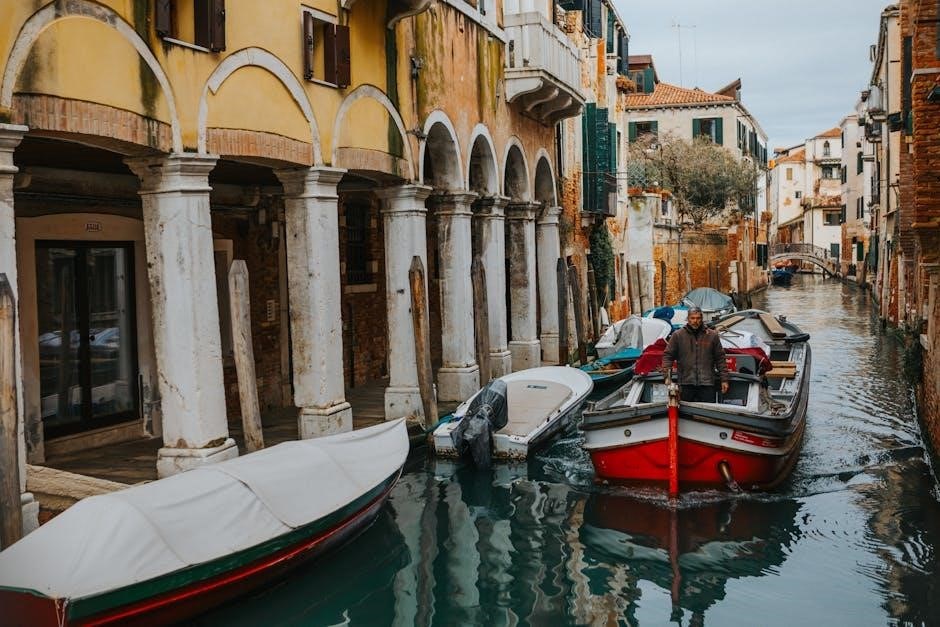
Key features include pointed arches‚ ornate tracery‚ and elaborate window designs‚ often incorporating quatrefoils and geometric patterns. Buildings frequently exhibit delicate loggias and balconies‚ adorned with intricate carvings. The use of brick‚ alongside Istrian stone‚ is prevalent‚ creating a rich textural contrast. Notice the prevalence of pink Verona marble‚ adding a touch of local color.
Observe how facades are often divided into horizontal bands‚ and how decorative elements are integrated seamlessly into the structural framework. This style‚ visible throughout Venice‚ creates a cohesive and visually stunning urban landscape‚ enriching any self-guided tour experience.